Continuity (When the Limit Equals the Function Value)
Calculus I
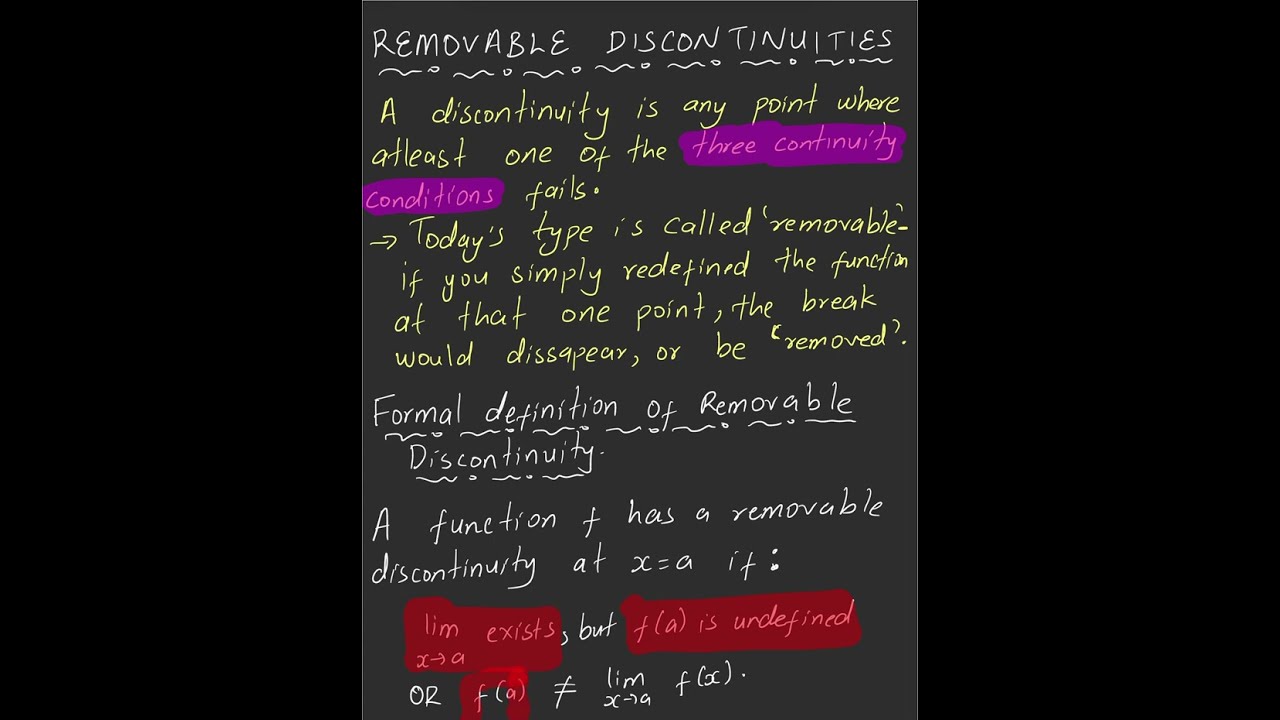
You need to know what 'continuous' actually means — both in plain language and as a formal definition, because the AP exam will test the formal version directly
Notes & explanation
The informal definition
A function is continuous if you can draw its graph without lifting your pencil — no holes, no jumps, no breaks.
The formal definition
That plain-language version is not enough for the exam. Formally, is continuous at if and only if all three conditions hold:
- is defined
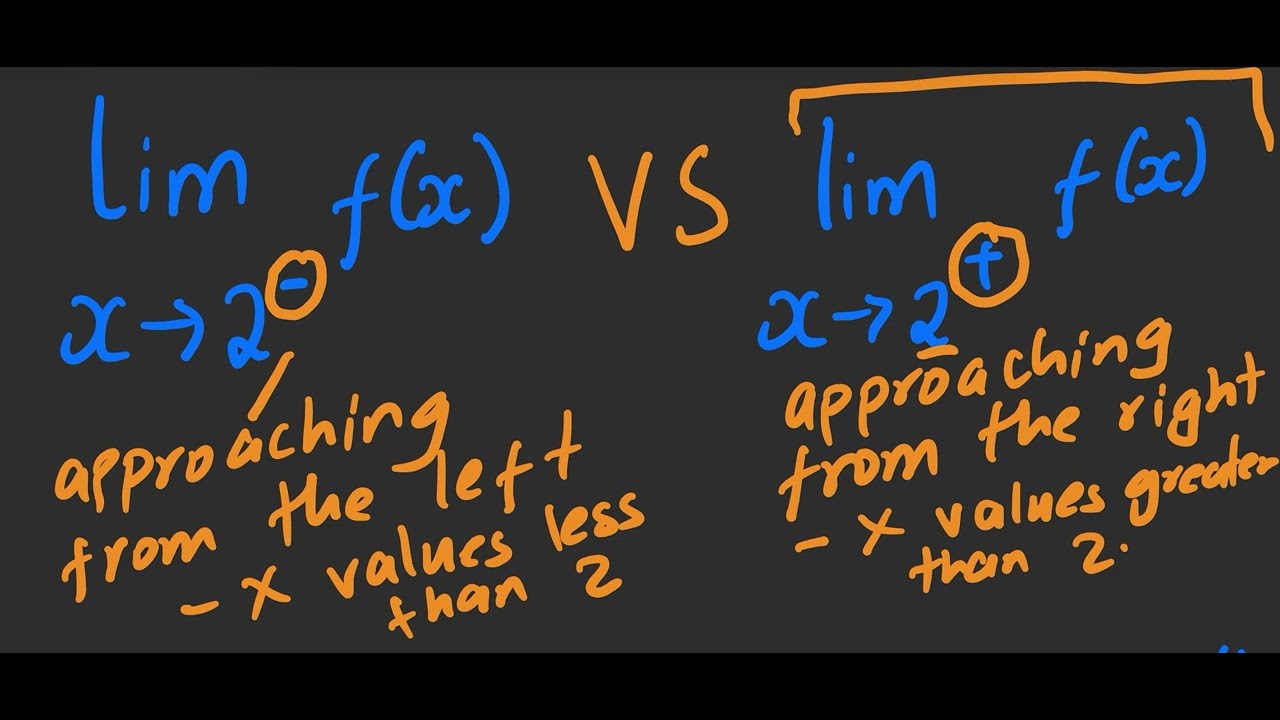
- exists
The video stresses the third condition as the whole point: the limit has to equal the actual function value at that point.
Worked example
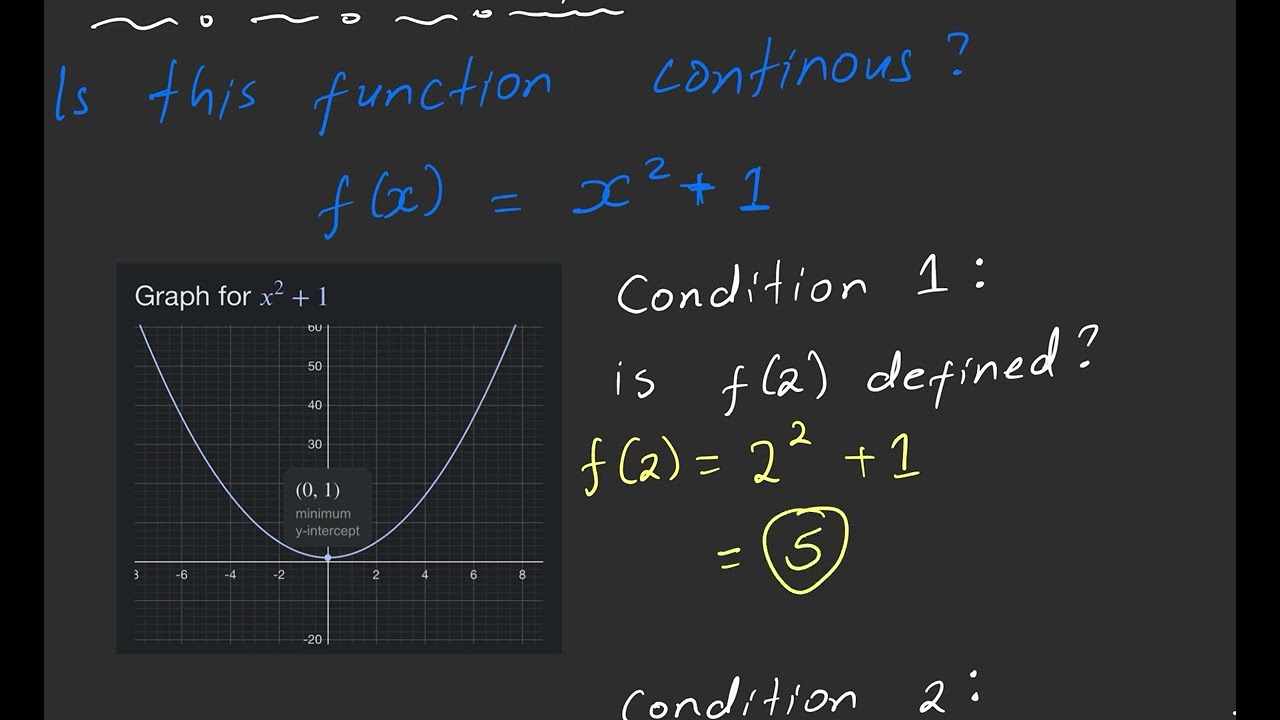
Determine whether is continuous at . (This is the graph of shifted up one unit.)
Condition 1 — is defined? Substitute:
Condition 2 — does the limit exist? This is a polynomial, and polynomials are continuous everywhere, so direct substitution is valid:
Condition 3 — do they match? Both give , so yes.
All three conditions hold, therefore is continuous at — and that is exactly why the limit and the function value are the same number.
Exam note
On a free-response question, write the notation out properly and show each condition. Marks are easily lost on sloppy justification even when the answer is right.